Health Canada' provides advice on recognizing heat exhaustion and heat stress:
A concise, easy-to-use infographic was produced by Health Canada to educate Canadians on this important safety issue. We’ve shared that advice below. You can download the complete infographic for yourself at this link. Regardless of the type of environment you work in, this info would make for a very good tool-box talk or safety brief at your morning meeting with team mates at your worksite.
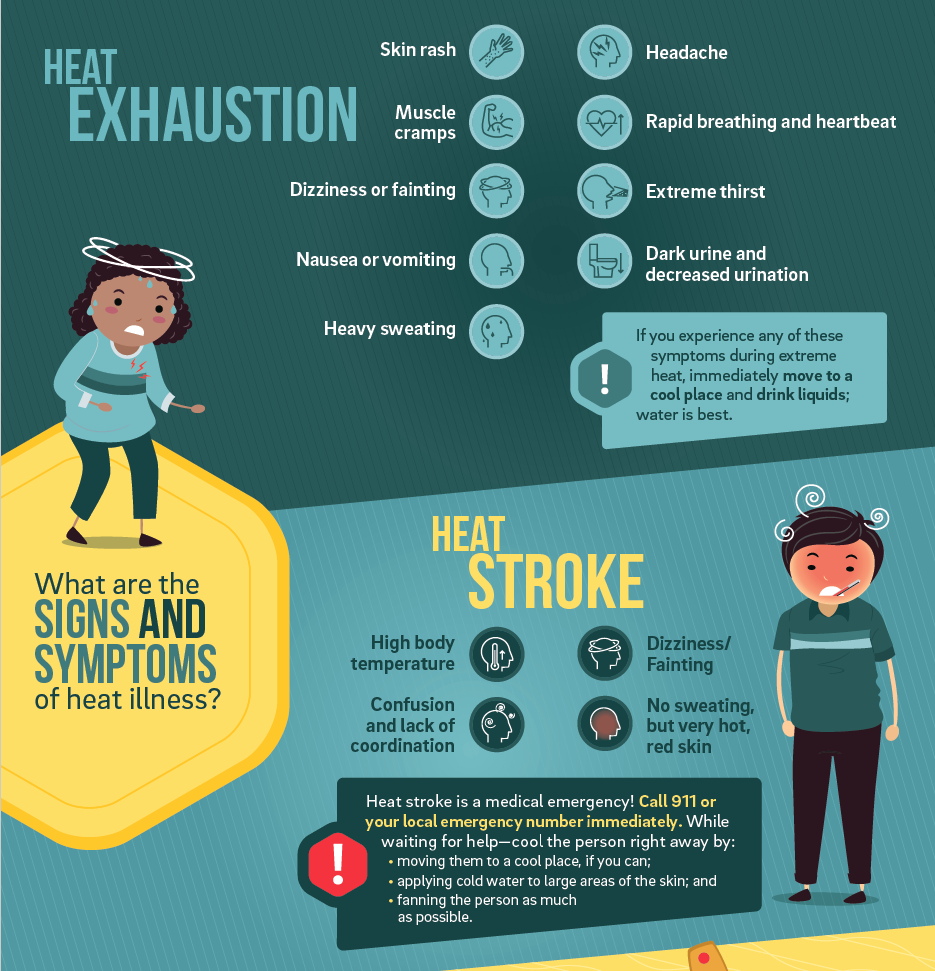
What are the signs and symptoms of heat illness?
Heat Exhaution:
Skin rash
Muscle cramps
Dizziness or fainting
Nausea or vomiting
Heavy sweating
Headache
Rapid breathing & heartbeat
Extreme thirst
Dark urine & decreased urination
** If you experience any of these symptoms during extreme heat, immediately move to a cool place and drink liquids; water is best.
Heat Stroke:
High body temperature
Confusion & lack of coordination
Dizziness/fainting
No sweating, but very hot, red skin
*** Heathstroke is a medical emergency! Call 911 immediately. While waiting for help-cool the person right away by:
moving them to a cool place, if you can;
applying cold water to large areas of the skin; and
fanning the person as much as possible.
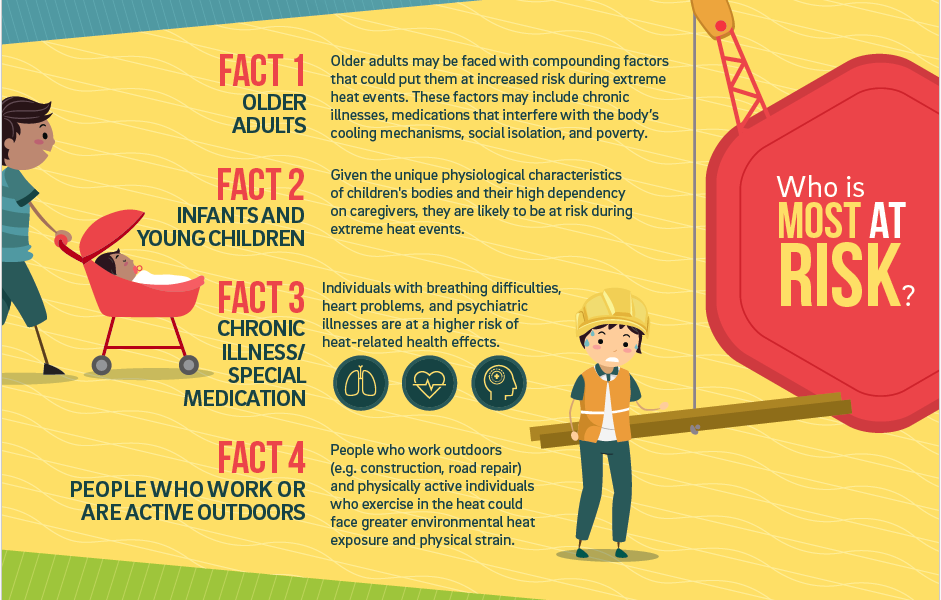
Who is most at risk for heat related illness?
Older adults
Infants & young children
Those with chronic illness/special medication (including SSRI’s)
People who work or are active outdoors
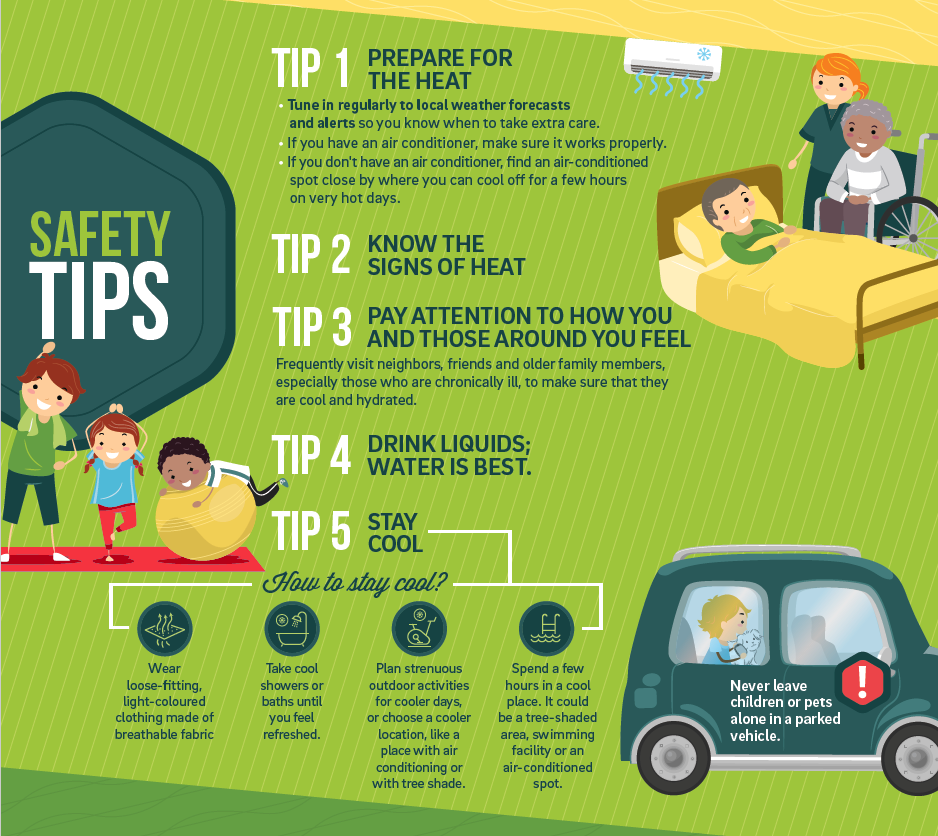
Safety tips for hot weather:
Prepare for the heat: Check air conditioner equipment is working, and if not available, identify cool areas or designated cooling centres where you can cool off for a few hours on very hot days
Know the signs of heat illness.
Pay attention to how you and those around you feel: Stay in touch with colleagues, neighbours, friends, older family members.
Drink liquids frequently; water is best.
Stay cool: Wear light, loose fitting clothing, take cool showers, plan outdoor activities for cooler times of day, rotate your time in cooler spots.
Get more information and resources on heat-related illness:
Speak with your physician or personal care provider, or contact your local public health authority.
Image credits: The banner image for this blog is from Pixabay.com All images included in the rest of the blog are snippets of the original infographic produced by Health Canada. Get the full version of the graphic here.